


at a glance: The idk Oberseminar
Kirsten Twelbeck
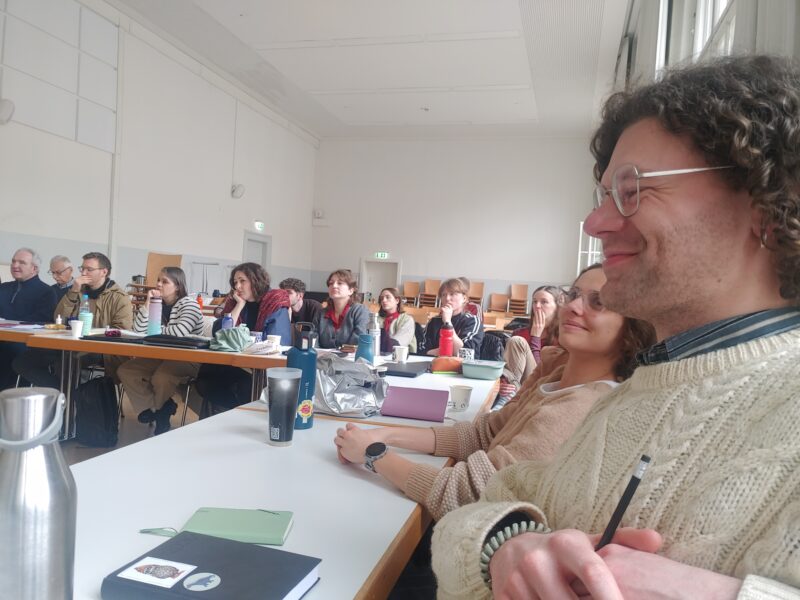
The annual “Oberseminar” is an IDK flagship event. PhD students and supervisors meet for two days in a row to learn about the current state of all the dissertations, including the work of the IDK research group “Off the Menu”. It is a true exercise in interdisciplinary debate: young and senior scholars from all the disciplines participating engage in scholarly conversations across disciplinary boundaries. The Oberseminar is a space where PhD researchers practice presenting their projects clearly and concisely — and learn how to make their work accessible and understandable to a multidisciplinary audience. It is also a forum where they are encouraged to ask questions: “Does my hypothesis make sense to you?” “Can you recommend a text that might help me with this question?” “What do you think about the general structure”?
Kirsten Twelbeck
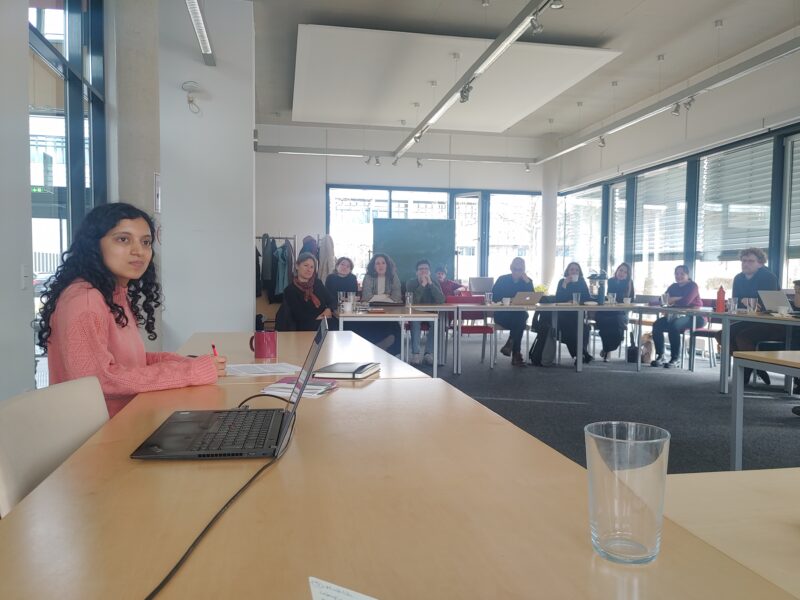
Here are a few glimpses of the first IDK Oberseminar: In her project “ALTER/NATIVE OCEANIC FUTURES: SPECULATIVE SURVIVANCE IN THE ANTHROPOCENE,” Anumitha John approaches the ocean as a living, more-than-human space and explores how decolonial imaginaries and alternative oceanic futures can challenge the colonial, capitalist, and extractive logics that shape dominant Anthropocene narratives.
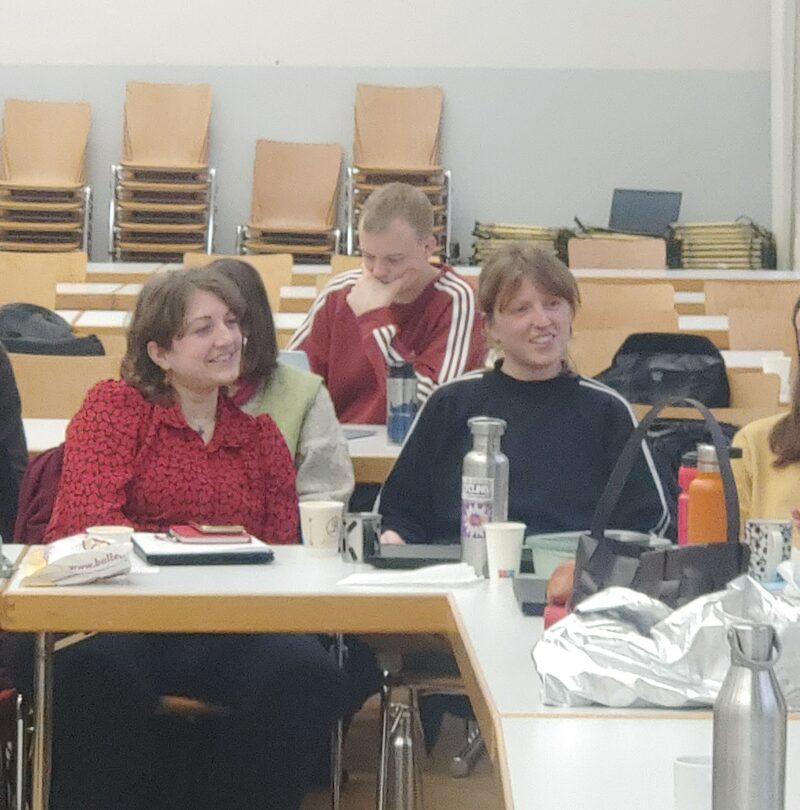
Philine Schiller (left) and Svea Busse (right), in conversation
Kirsten Twelbeck
Svea Busse, by contract, zoomed in on the nearby region: BECOMING LANDSCAPES: PROCESS-RELATIONAL PERSPECTIVES ON ALPINE GRASSLANDS IN A CHANGING WORLD asks new questions about the future of conservation efforts in an environment that is, to a large extent, shaped by humans who live with and in the Alps.
In PRESERVED IN PRINT: AMERICAN FOOD WRITING, SHIFTING FOODWAYS AND THE OYSTER UNDER THE SURFACE, Philine Schiller (Off the Menu) took the audience on a journey into the fascinating and changing world of that very particular type of mollusk.
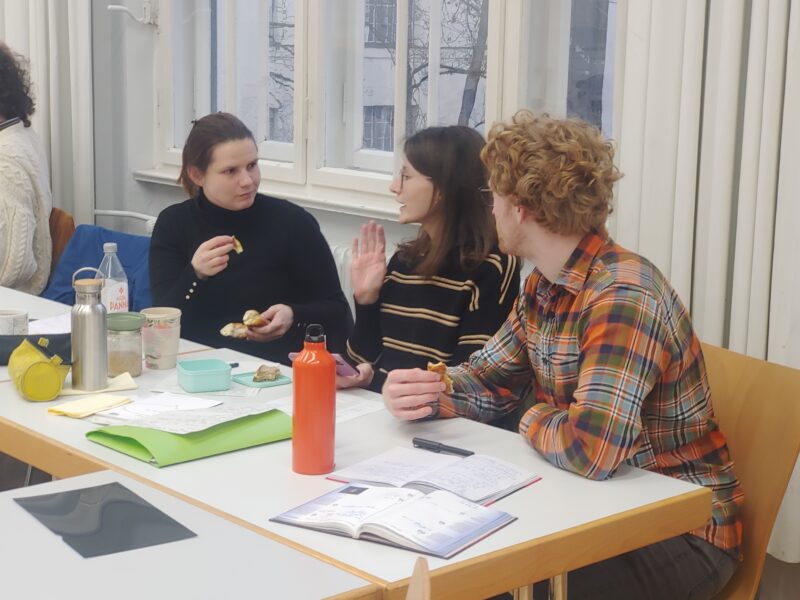
Martiné van der Walt (left), Julia Petersen (middle) and Steffen Bruse (right)
Kirsten Twelbeck
The IDK Oberseminar is work-intensive, but it is also a much rewarded event: For participants it is an opportunity to learn more about each research project, discover overlaps with and potential challenges to their own dissertation, and think of new questions (and answers) to the socio-ecological challenges of our day. It is an inspiration for follow-up conversations in the weeks that follow — a starting point for asking more questions, sharing perspectives, and learning from one another.