


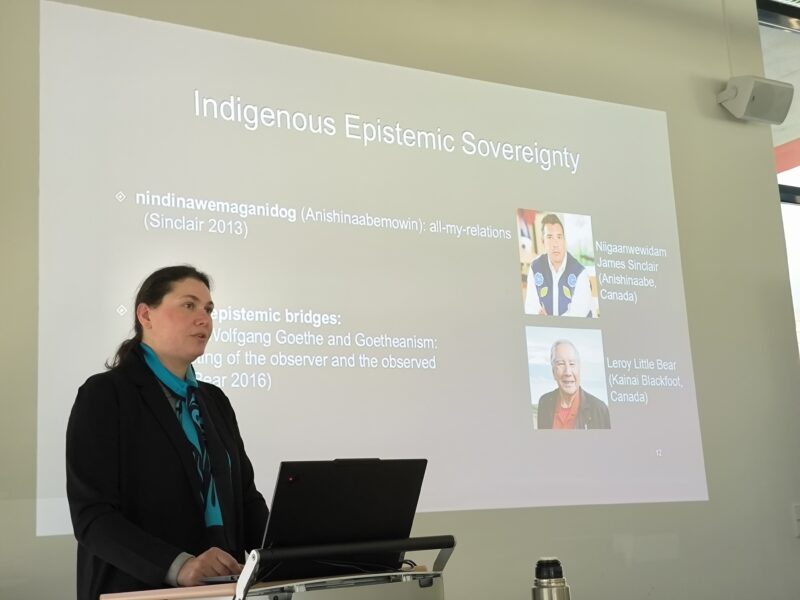
Review: Green Hour: “Knowing Otherwise: Indigenous Storytelling and Environmental Relations” (Dr. Juliane Egerer)
Can storytelling help heal colonial ecological trauma? Yes, says Scandinavian Studies scholar Juliane Egerer in her lecture about the restorative power of storytelling from present-day Kalaallit Inuit, Sámi, and Anishinaabe cultures—if there is a willingness to listen to, and get engaged with, narratives that depart from the western realist tradition of representation. Indigenous storytelling is “not about the world but what the world is made of” (Egerer), and while living in the real world is an important reference point, indigenous narratives do not hesitate to include dreams and imaginative journeys to create complex stories that aim at empowering and inspiring present and future generations. Often rooted in oral traditions, contemporary indigenous storytelling reclaims the past in contemporary fiction, film, and other media, and uses technology to acknowledge the spiritual, emotional, and ethical relations to land, body, and community in ever new ways. Interweaving indigenous and western thinking, contemporary Indigenous film making from Greenland and North America creates non-cartographic imagery of the land and bridges humans with the non-human world.
Written by Kirsten Twelbeck