


Kirsten Twelbeck
Review: Green Hour: “Philosophy and Ethics of Biodiversity – Epistemic and moral-political dimensions” (Prof. Dr. Thomas Potthast)
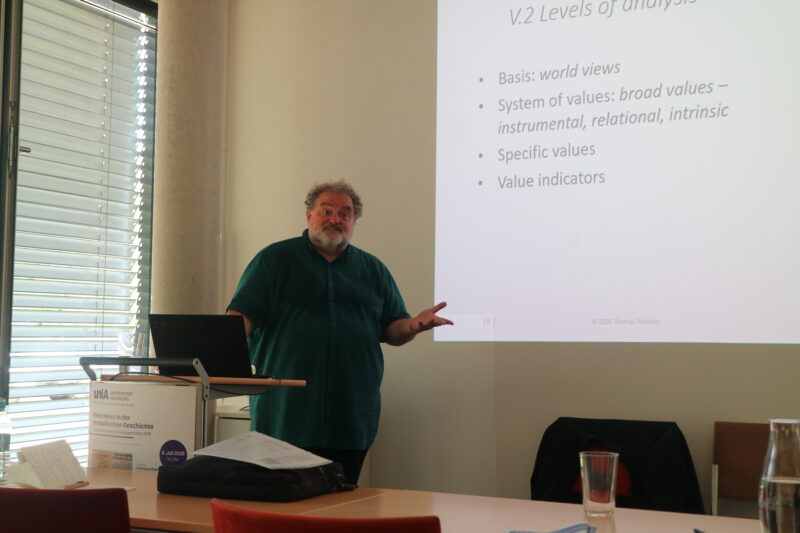
There are talks that not only make us rethink things we thought we understood but that also spark questions that inspire further reflection. Thomas Potthast’s short yet concise presentation about biodiversity, which was the concluding Green Hour lecture for the semester, was one of them. He started by complicating everyday definitions of biodiversity (the concept contains not only animals and plants but must be considered in the context of genetics, evolution, and ethical considerations. It includes anthropogenic elements, like crops.
Biologic entities contain more than just one type. Biologic systems are structured hierarchically) and emphasized the scientific-political dimension: biodiversity was “invented” in the context of human concerns about the risks that inhere in the decline of what we may also call “abundance,” and it has been instrumental in the formulation of texts like the UN Convention on Biological Diversity (CBD).
Among the challenges that emerge in such contexts are ethical-philosophical considerations: is biodiversity intrinsically valuable? Or should we see it as an instrumental and/or relational category in the first place? How can we decide what has “value” if we are incapable of reading the relationships in the more-than-human world?
Written by Kirsten Twelbeck